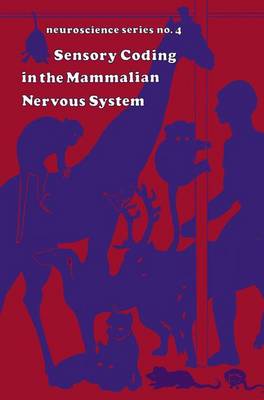

Great advances have been made in the area of sensory physiology during the last few decades, and these developments seem to be asking for a comprehensive review that is manageable in size and cohesive in content. This volume has been written with that goal in mind. In the first place I would like to thank Mr. R. van Frank of Appleton-Century-Crofts for asking me to do the job, and my wife for persuading me to do it, for writing it was an enjoyable task. Much of the discussion of factual data set to print here evolved in question-and-answer sessions in courses given to students in physiology, psychology, and medicine, and to physicians training in neurology, neurosur- gery, and psychiatry. Besides my students, I had in mind while preparing this text my professional colleagues laboring on their lecture notes under circum- stances perhaps not unlike my own. The material is divided in two parts. The first deals with the manner of representation of sensory information in peripheral nerves: the so-called first order code. The second half of the text deals with the handling of sense data by the central nervous system.
One reason for dividing the material in this way is that many of the features of the first-order code are common to all sensory modalities. The intensity, the place, the rhythm, the "quality" of stimuli are encoded by rules which are applicable, albeit with appropriate modifications, to all senses. Furthermore, these rules of coding are today rather well understood.
 Kids will love this hilarious fairy tale adventure packed with clever twists, familiar characters and page-turning fun.
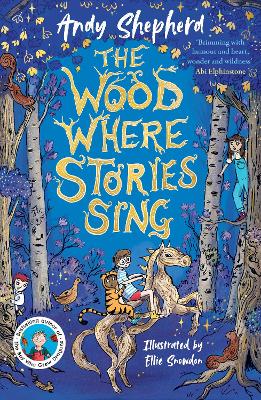 The second book in a fabulous new magical, middle-grade series filled with adventure, wonder and wildness,
This is Book 1 in the Neuroscience Series Series. See all Neuroscience Series books here.
No one has written a review for 'Sensory Coding in the Mammalian Nervous System'
Why not be the first to share your opinion?